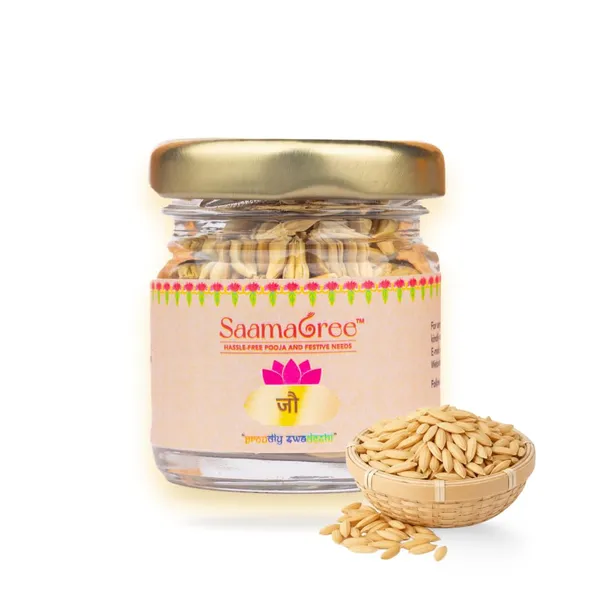


Barley Grains For Havan And Pooja
₹179
₹359
50% OffFinal Price inclusive of all taxes
Cash on Delivery
Free Delivery
Get it delivered in 3-6 days
size
FREE SIZE
Product Information
Manufacturer
SAAMAGREE
Brand Name
SAAMAGREE
Manufacturer
SAAMAGREE
Top Brand
SAAMAGREE
Product Description
The Grain of Vedic Fire. Offered at Every Ahuti. In the Vedic fire ritual, the havan kund receives offerings at each ahuti grains, ghee, herbs, and resins offered with mantra into the sacred flame. Among these offerings, Jau barley is among the most ancient and most specified. It appears in the Rigveda's ritual descriptions, in the havan vidhi of multiple Vedic traditions, and in the regional puja practices of Navratri, Griha Pravesh, and Satyanarayan Puja across India. SAAMAGREE Jau is sourced and prepared to meet the standard this ancient role requires. Why Jau in the Havan Barley is among the oldest cultivated grains on the Indian subcontinent its use in ritual predates the common era by millennia. In havan vidhi, it is offered for multiple intentions: for health and the sustaining of the body; for fertility and the continuity of the family; for prosperity and the growth of what has been planted; and for the completion of auspicious undertakings. Its natural earthy fragrance when burned is distinct from rice or sesame grounding, honest, and unmistakably the smell of genuine Vedic fire ritual. Navratri Beej Poojan The Germination Ritual Navratri begins with Beej Poojan the planting of Jau seeds in soil-filled clay pots or trays at the start of the nine-night festival. As Navratri progresses, the barley germinates and grows the height and health of the sprouts are traditionally read as indicators of the auspiciousness of the coming year. On Navami, the sprouts are offered to the goddess and distributed as her prasad. For this ritual to work correctly, the Jau must be viable untreated, fresh, and capable of germination. Commercially treated grain often will not sprout. SAAMAGREE Jau is sourced and stored to preserve germination viability. Rudra Havan and Shaivite Fire Ritual In Shiv puja's havan sequence Rudra Havan, Maha Mrityunjaya Havan, and Laghu Rudra Jau appears alongside Til, Guggul, and ghee as a primary offering. For devotees who perform regular Monday havan or Shivratri fire ritual, Jau is a consumable that runs out and needs replenishment. This standalone SKU provides that replenishment in the same quality as the Jau included in SAAMAGREE's Shiv Aaradhana Samagri Kit. Satyanarayan Puja and Griha Pravesh Yagna Jau appears in the havan sequences of Satyanarayan Puja and Griha Pravesh yagna both widely performed household ceremonies across India. For families preparing for these ceremonies, having clean, ritual-grade Jau without sourcing from general grain markets ensures the purity standard the ritual requires. Gudi Padwa, Navgrah Pooja & Regional Traditions Jau appears in Gudi Padwa rituals in Maharashtra, in Navgrah Puja offerings across multiple traditions, and in regional harvest and agricultural ceremonies where barley's ancient role as a grain of prosperity and fertility is acknowledged. Each tradition draws on the same quality: clean, fresh, genuinely sourced Jau. The Replenishment SKU SAAMAGREE's Shiv Aaradhana Samagri Kit includes Jau as one of its 8 components. This standalone product exists for devotees who need Jau specifically for Navratri Beej Poojan, regular havan, or occasions where only the barley is required rather than the complete kit. Offer what the fire has always received. Offer Jau with purity.
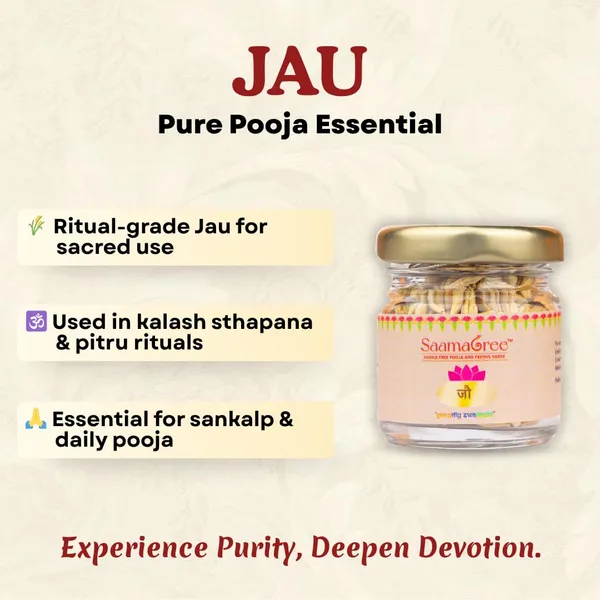
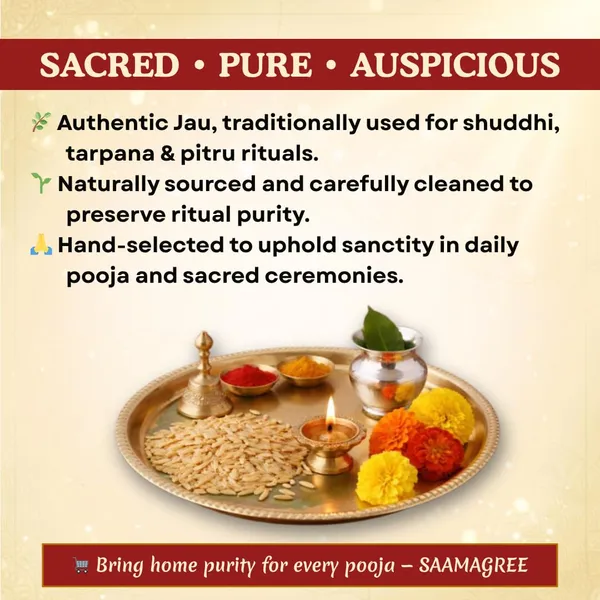
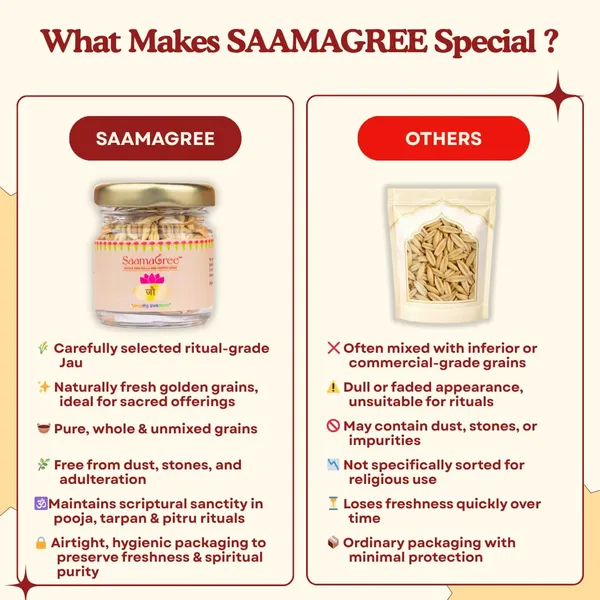
- Havan-Grade Pure Barley Grains: Handpicked, cleaned, and graded Jau with no chemical treatment, pesticide residue, or artificial coating the ritual-purity standard required for havan ahuti, where what is offered to the sacred fire must be as clean as the intention behind it.
- Vedic Havan'S Primary Grain Offering: Jau is among the most frequently specified grains in Vedic havan vidhi offered at each ahuti during Rudra Havan, Navratri havan, Satyanarayan Puja, Griha Pravesh yagna, and Homam invoking blessings for health, prosperity, fertility, and the completion of all auspicious undertakings.
- Navratri Beej Poojan Essential: During Navratri, Jau is sown in soil as part of the Beej Poojan ritual the germination of barley in the first days of Navratri symbolises growth, new beginnings, and the goddess's life-giving energy. Healthy, clean Jau germinates more consistently than commercially treated grain.
- Burns With Natural Earthy Aroma: When offered in the havan kund at each ahuti, Jau produces a clean, natural, earthy fragrance not the chemical smell of treated grain. The aroma itself is considered part of the offering, purifying the space and creating the atmosphere of authentic Vedic fire ritual.
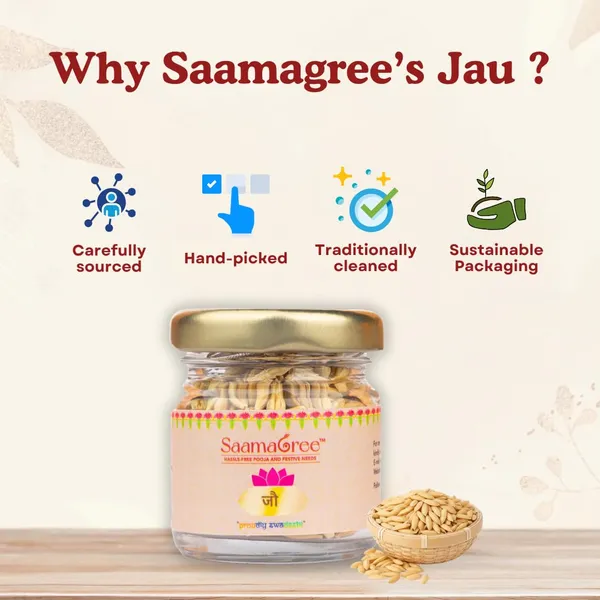
- Clean, Fresh & Ethically Sourced: Sustainably sourced, free from chemical pesticides and synthetic treatments, packed fresh for immediate ritual use the same purity standard applied to every SAAMAGREE ingredient across the complete pooja samagri range.